Energy-Efficient Window Treatments: Cut Heating & Cooling Bills in 2026
Energy-Efficient Window Treatments: Cut Heating & Cooling Bills in 2026
Windows are the weakest link in your home's thermal envelope. According to the U.S. Department of Energy, 25% to 30% of residential heating and cooling energy use is attributable to heat gain and loss through windows. That translates to $150 to $500 per year in wasted energy for the average American household.
The good news: the right window treatments can dramatically reduce that waste. Energy-efficient blinds and shades act as an additional insulating layer, keeping heat inside during winter and blocking solar heat gain during summer. This guide covers the science, the best products, real savings numbers, and financial incentives available in 2026.
How Windows Lose (and Gain) Energy
Before choosing energy-efficient window treatments, it helps to understand the three ways windows affect your energy bills:
1. Conduction
Heat transfers directly through the glass. Single-pane windows lose heat roughly twice as fast as double-pane windows. Window treatments add an insulating air pocket that slows conduction.
2. Radiation
Solar radiation passes through glass and heats surfaces inside your home. In summer, this solar heat gain forces your air conditioner to work harder. In winter, it can be beneficial. Smart window treatments manage radiation differently by season.
3. Convection
Temperature differences between the glass surface and room air create convection currents. Cold glass chills the air next to it, causing it to drop and pull warm room air toward the window in a cycle that drains heat. Tight-fitting window treatments disrupt this cycle.
Energy Efficiency Ratings Explained
R-Value
R-value measures resistance to heat flow. Higher R-values mean better insulation.
| Material | Approximate R-Value |
|---|---|
| Single-pane glass (alone) | R-0.9 |
| Double-pane glass (alone) | R-1.5 to R-2.0 |
| Triple-pane glass (alone) | R-2.5 to R-3.5 |
| Standard roller shade | R-1.0 to R-1.5 (added) |
| Single-cell cellular shade | R-2.0 to R-3.0 (added) |
| Double-cell cellular shade | R-3.5 to R-5.0 (added) |
| Triple-cell cellular shade | R-5.0 to R-7.5 (added) |
| Interior shutters (closed) | R-2.5 to R-3.5 (added) |
| Insulated Roman shades | R-3.0 to R-4.5 (added) |
Adding a double-cell cellular shade to a double-pane window effectively creates a window system with R-5.0 to R-7.0 — comparable to a thin insulated wall.
AERC Certification
The Attachments Energy Rating Council (AERC) provides standardized energy performance ratings for window attachments. Products with AERC certification have been independently tested and verified. Look for the AERC label when shopping for energy-efficient window treatments.
ENERGY STAR Recognition
In 2024, ENERGY STAR expanded its program to include window attachments for the first time. ENERGY STAR-certified window attachments meet specific energy performance criteria, making it easier for consumers to identify genuinely efficient products.
The Best Energy-Efficient Window Treatments, Ranked
1. Cellular (Honeycomb) Shades — Best Overall
Cellular shades are the undisputed champion of energy-efficient window treatments. Their unique honeycomb structure creates insulating air pockets that dramatically reduce heat transfer.
Energy Performance:
- Single-cell: Reduces window heat loss by 40% to 50%
- Double-cell: Reduces window heat loss by 55% to 65%
- Triple-cell: Reduces window heat loss by 65% to 75%
Key Features for Maximum Efficiency:
- Cell size matters. Larger cells (3/4-inch) trap more air and insulate better than smaller cells (3/8-inch)
- Side tracks or channels seal the edges and prevent air from flowing around the shade
- Top-down/bottom-up operation lets you adjust for both privacy and solar heat management
- Blackout fabrics add an extra layer of insulation compared to light-filtering options
Cost: $55 to $180 per window (custom). View our cellular shade options.
DOE Estimated Savings: The Department of Energy estimates cellular shades can reduce heat loss through windows by up to 40% in winter and reduce unwanted solar heat gain by up to 80% in summer when properly fitted and operated.
2. Insulated Roman Shades — Best for Style + Efficiency
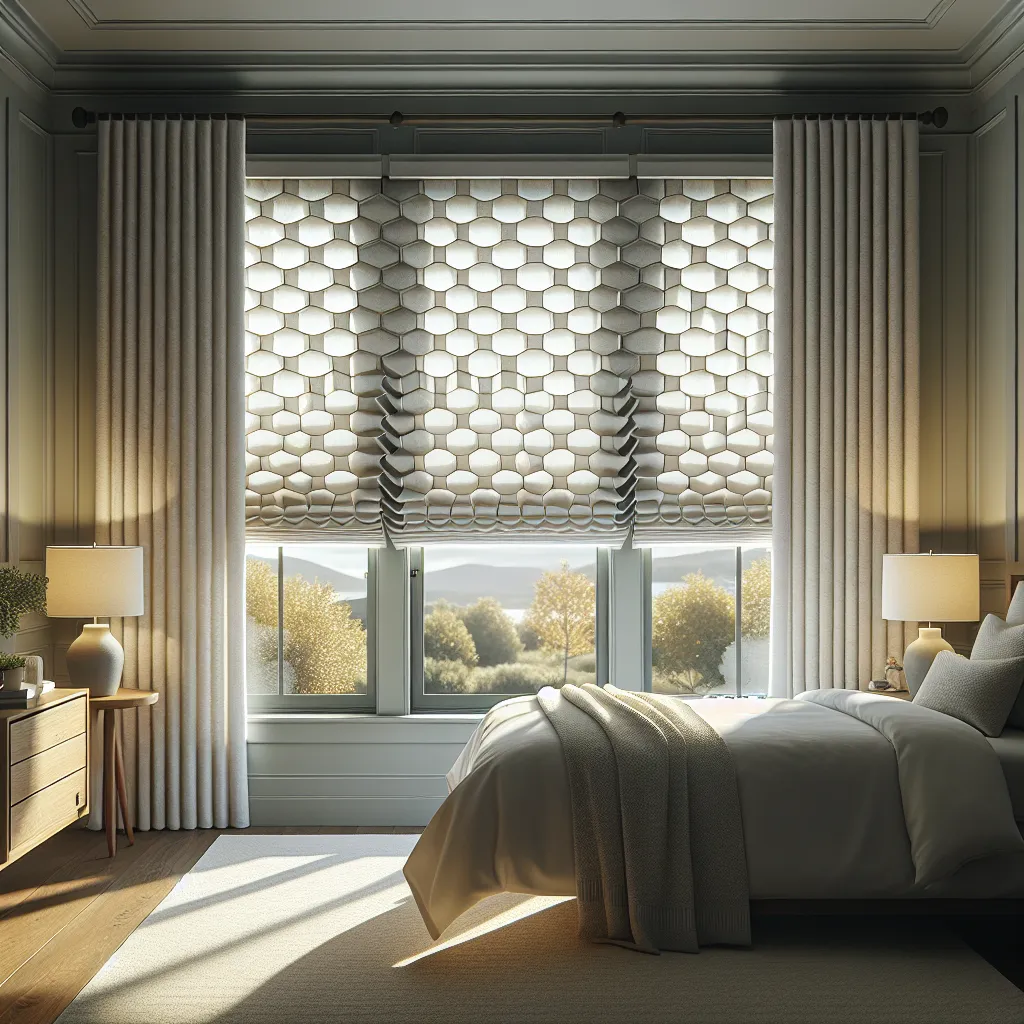
Insulated Roman shades combine the soft, layered look of fabric shades with thermal backing that blocks heat transfer.
Energy Performance:
- Thermal-backed Roman shades reduce heat loss by 35% to 45%
- When lined with an additional insulating layer, they can reach 50% to 60% heat loss reduction
Why They Work: The multiple fabric layers create dead air spaces (similar to cellular shades but in a different form factor). When lowered, they provide a substantial barrier between the cold glass and your room.
Cost: $80 to $250 per window (custom).
3. Plantation Shutters — Best for Long-Term Performance
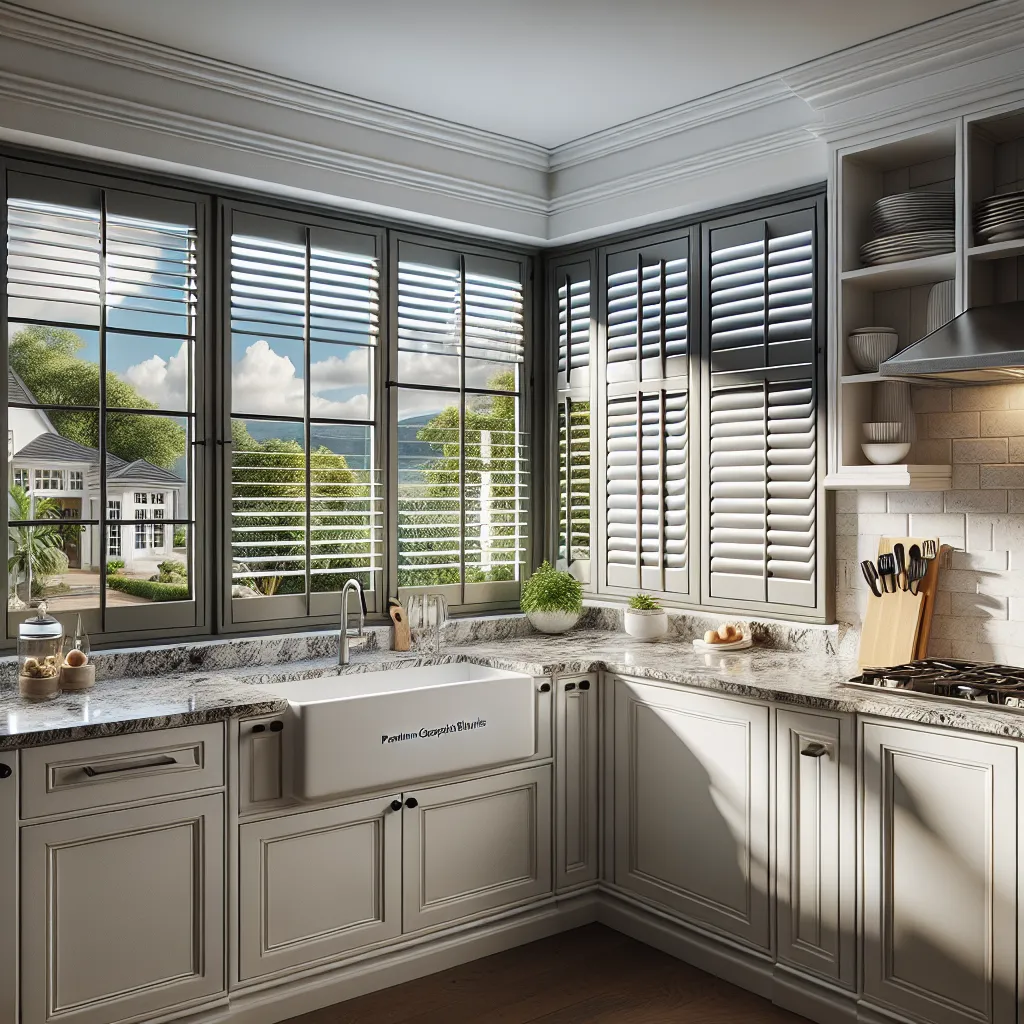
Interior plantation shutters are solid barriers that provide good insulation, especially when closed tightly.
Energy Performance:
- Reduce heat loss by 30% to 45% depending on material and fit
- Wood shutters insulate better than vinyl due to wood's natural insulating properties
- Tightly fitted shutters with weatherstripping at contact points perform best
Added Benefit: Shutters last 20 to 25 years, meaning their energy savings compound over a very long period. A shutter that saves $40 per year in energy costs delivers $800 to $1,000 in lifetime savings.
Cost: $200 to $600 per window (custom).
4. Roller Shades with Thermal Backing — Best Budget Option
Standard roller shades provide minimal insulation, but models with reflective or thermal backing perform significantly better.
Energy Performance:
- Standard roller shade: 10% to 20% heat loss reduction
- Thermal-backed roller shade: 25% to 40% heat loss reduction
- Reflective-backed roller shade: Blocks up to 75% of solar heat gain in summer
Cost: $40 to $150 per window. Browse our roller shade collection.
5. Layered Window Treatments — Best Maximum Performance
Combining two window treatment types creates the highest possible insulation:
- Cellular shade + curtains: R-6 to R-9 combined
- Roller shade + drapes: R-4 to R-7 combined
- Shutters + cellular shade: R-6 to R-10 combined
Layering is especially effective in extreme climates where heating or cooling costs are highest.
Seasonal Strategies for Maximum Savings
Energy-efficient window treatments work differently in winter and summer. Using them strategically by season maximizes your savings.
Winter Strategy: Retain Heat
During daylight hours:
- Open south-facing window treatments to allow free solar heat gain
- Keep north-facing treatments closed (no direct sun, only heat loss)
- East-facing: Open in the morning, close by noon
- West-facing: Keep closed in the morning, open in the afternoon
At night:
- Close ALL window treatments. Nighttime is pure heat loss with no solar gain to offset it
- The DOE estimates closing insulated window treatments at night can reduce heat loss by 25% to 40%
Pro tip: Set a reminder to close your blinds 30 minutes before sunset. That is when glass temperatures drop fastest and heat loss accelerates.
Summer Strategy: Block Solar Heat
During peak sun hours (10 AM to 4 PM):
- Close south-facing and west-facing treatments (these receive the most intense sun)
- Reflective-backed shades are especially effective — they bounce solar radiation back outside
- Keep east-facing treatments closed in the morning
During cooler periods (evening and night):
- Open window treatments to allow natural ventilation if windows are open
- If running AC, keep treatments closed 24/7 for maximum efficiency
Key stat: Closing blinds and shades during summer days can reduce indoor temperatures by 8 to 15 degrees Fahrenheit near windows, significantly reducing air conditioning load.
Real Energy Savings: What the Numbers Show
DOE Data on Window Treatment Energy Savings
The Department of Energy has published extensive research on window attachment energy savings:
- Medium-performance interior cellular shades save an average of $100 to $180 per year on heating and cooling in a typical single-family home with 15 to 20 windows
- In cold climates (heating-dominated), savings skew toward $130 to $220 per year
- In hot climates (cooling-dominated), savings range from $80 to $160 per year
- Mixed climates see savings of $100 to $180 per year
Cost-to-Savings Ratio by Product Type
| Window Treatment | Avg Cost (15 windows) | Annual Savings | Payback Period |
|---|---|---|---|
| Single-cell cellular shades | $1,050 | $100 – $140 | 7.5 – 10 years |
| Double-cell cellular shades | $1,650 | $130 – $180 | 9 – 13 years |
| Insulated Roman shades | $2,400 | $110 – $160 | 15 – 22 years |
| Thermal roller shades | $900 | $70 – $110 | 8 – 13 years |
| Plantation shutters | $5,250 | $100 – $150 | 35+ years (but they last 20+ years) |
Important context: These payback periods are based on energy savings alone. When you factor in the comfort improvement, light control, privacy, UV protection (prevents furniture fading), and home value increase, the real return on investment is significantly better.
Regional Savings Variation
Your location has a major impact on how much you save:
| Region | Primary Benefit | Estimated Annual Savings (15 windows, cellular shades) |
|---|---|---|
| Northeast | Winter heat retention | $140 – $220 |
| Midwest | Winter heat retention + summer cooling | $130 – $200 |
| Southeast | Summer cooling reduction | $100 – $170 |
| Southwest | Summer cooling reduction (high impact) | $120 – $190 |
| Pacific Northwest | Winter heat retention | $110 – $170 |
| Mountain West | Both heating and cooling | $130 – $210 |
Homeowners in extreme climate zones (Minnesota winters, Arizona summers) see the highest returns on energy-efficient window treatments.
Utility Rebates and Incentive Programs
Many utility companies and state programs offer rebates for energy-efficient home improvements, including qualifying window treatments.
How to Find Available Rebates
- DSIRE database (dsireusa.org): The Database of State Incentives for Renewables and Efficiency lists all available rebates and incentives by state and zip code.
- Your utility company's website: Many utilities have dedicated "rebates" or "savings" pages listing current programs.
- ENERGY STAR rebate finder: The ENERGY STAR website maintains an updated rebate search tool.
Common Rebate Types
- Per-window rebates: $5 to $25 per window for qualifying energy-efficient treatments
- Percentage rebates: 10% to 20% off the purchase price (up to a cap)
- Flat rebates: $50 to $200 per household for qualifying improvements
- Bundled rebates: Higher incentives when window treatments are part of a larger efficiency upgrade
Choosing the Right Energy-Efficient Treatment for Each Room
Bedrooms
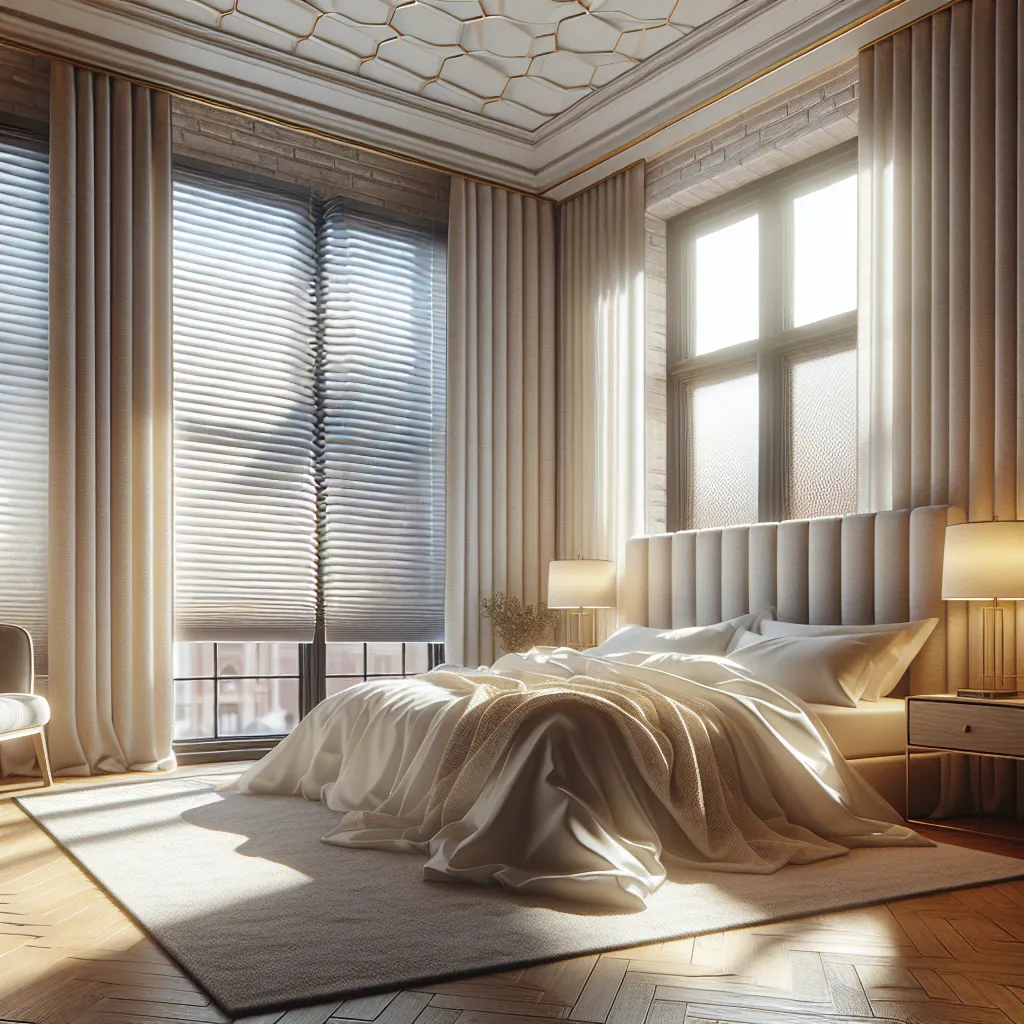
Best choice: Double-cell cellular shades in blackout fabric with top-down/bottom-up operation. Why: Maximum insulation, complete light blocking for sleep, and flexible privacy control. The blackout fabric adds thermal mass beyond what light-filtering cellular shades provide.
Living Rooms
Best choice: Cellular shades with side tracks, or insulated Roman shades for a more decorative look. Why: These rooms have the largest windows and are used during peak heating/cooling hours. Side-tracked cellular shades provide near-commercial-grade insulation.
Kitchens
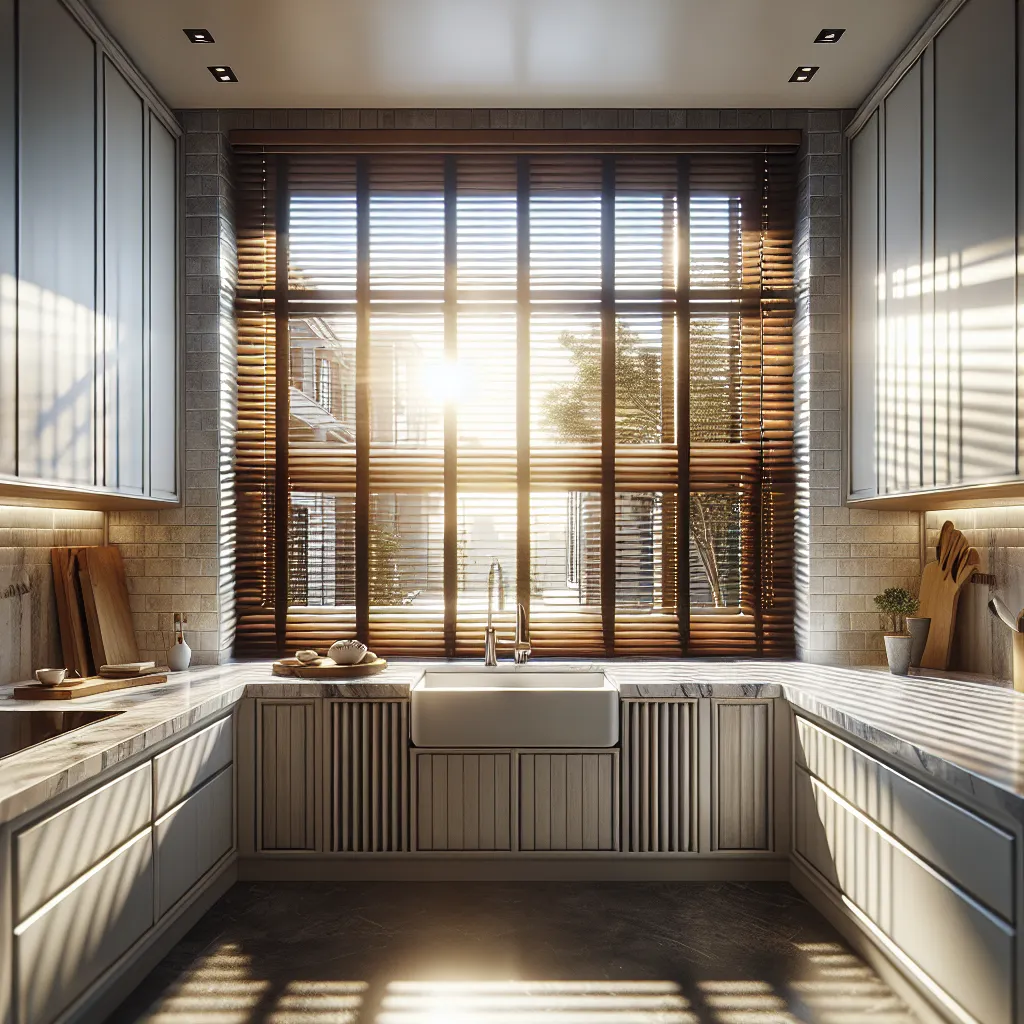
Best choice: Thermal-backed roller shades or faux wood blinds. Why: Kitchens generate their own heat (cooking), so moderate insulation is sufficient. Moisture resistance is important. Roller shades are easy to clean.
Bathrooms
Best choice: Moisture-resistant cellular shades or faux wood blinds. Why: Standard cellular shades can absorb moisture and develop mold. Look for products specifically rated for high-humidity environments.
Home Office
Best choice: Cellular shades with top-down/bottom-up or dual shades (light-filtering + blackout). Why: Manage glare on screens while maintaining natural light and insulation. The adjustability is key for productivity.
Sunrooms and Large Glass Areas
Best choice: Solar roller shades with reflective backing + cellular shades for cooler months. Why: These spaces have the highest solar heat gain. Reflective solar shades can block 85% to 95% of solar heat while preserving the view.
Installation Tips for Maximum Energy Efficiency
Even the best energy-efficient blinds underperform if installed incorrectly:
1. Choose Inside Mount When Possible
Inside-mounted blinds sit within the window frame, creating a tighter seal. This reduces air leakage compared to outside-mounted treatments.
2. Minimize Air Gaps
The biggest efficiency killer is air flowing around the edges of your window treatments. Look for:
- Side channels/tracks that seal the left and right edges
- Top valances or cassettes that seal the top
- Bottom rails that sit flush with the window sill
3. Consider Double Treatments
A roller shade close to the glass combined with a cellular shade or curtain creates two insulating air pockets — dramatically improving performance.
4. Seal the Window First
No window treatment compensates for a leaky window. Before investing in energy-efficient blinds:
- Check weatherstripping and replace if worn
- Apply caulk around the window frame where it meets the wall
- Consider window film for single-pane glass
5. Automate If Possible
Motorized blinds with timers or smart home integration ensure your window treatments are positioned optimally throughout the day — even when you forget or are not home. The energy savings from consistent operation often offset the motorization cost within 3 to 5 years.
Measuring Your Actual Savings
Want to verify your energy-efficient window treatments are working? Here is how:
Compare Utility Bills
- Save 12 months of utility bills before installing new window treatments
- Compare to the 12 months after installation
- Account for weather differences using heating degree days (HDD) and cooling degree days (CDD) from your local weather station
Use a Smart Thermostat
Smart thermostats track energy usage patterns. Compare runtime data before and after window treatment installation. A reduction in HVAC runtime directly correlates to energy savings.
Infrared Thermometer Test
Point an infrared thermometer at your window glass before and after installing treatments (with treatments closed). A 5 to 15 degree Fahrenheit improvement in glass surface temperature indicates effective insulation.
Frequently Asked Questions
Do blinds really save energy?
Yes, but the amount varies significantly by product type. Basic vinyl mini blinds save only 5% to 10% on window-related energy loss. Double-cell cellular shades save 55% to 65%. The type of blind matters enormously.
What is the most energy-efficient window treatment?
Triple-cell cellular shades with side tracks and blackout fabric provide the highest R-value of any interior window treatment. For most homeowners, double-cell cellular shades offer the best balance of performance and cost. Learn more in our insulation guide.
Are energy-efficient blinds worth the cost?
For most homeowners, yes. Double-cell cellular shades pay for themselves in energy savings within 9 to 13 years and last 7 to 10 years. When you add comfort, UV protection, and aesthetics, the value proposition is strong.
Do window treatments work as well as new windows?
No. New double or triple-pane windows provide better insulation than any window treatment. However, energy-efficient window treatments cost 80% to 90% less than window replacement and still deliver meaningful savings. They are the best option when new windows are not in the budget.
Start Saving on Energy Bills Today
Energy-efficient window treatments are one of the most accessible and cost-effective home improvements you can make. Unlike major renovations, they require no permits, minimal disruption, and deliver immediate comfort improvements alongside long-term energy savings.
Ready to find energy-efficient window treatments for your home? Explore our collection to see options with energy performance ratings, or get in touch with our team for personalized recommendations based on your climate, window configuration, and budget.