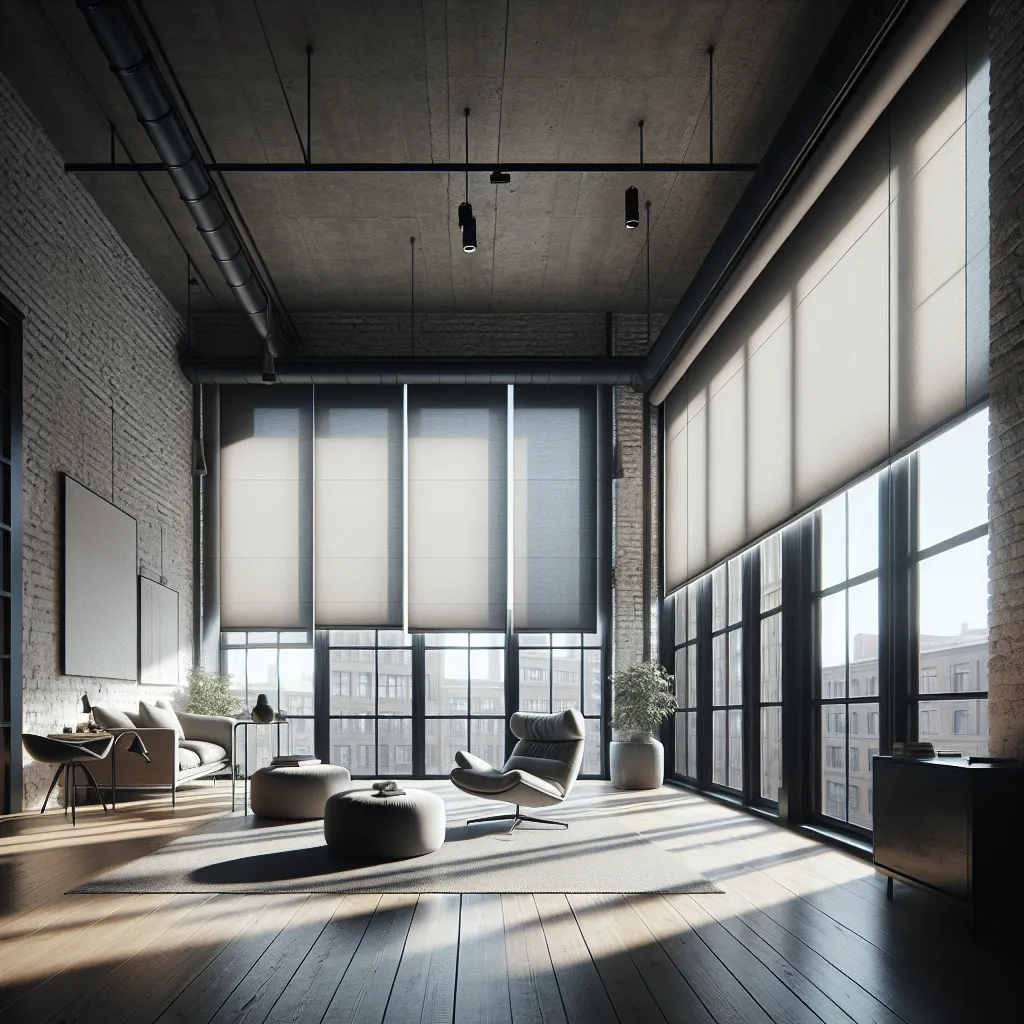
Cellular Shades vs Roller Shades: Which Should You Choose?
Cellular Shades vs Roller Shades: Which Should You Choose?
Cellular shades and roller shades are the two most popular shade types in the window treatment market, and they are often the final two contenders when homeowners narrow down their choices. Both offer a clean, modern look. Both come in light filtering and blackout options. And both mount easily inside or outside the window frame.
But beneath these surface similarities, cellular shades and roller shades are fundamentally different products built for different priorities. Cellular shades are engineered for insulation and energy efficiency. Roller shades are designed for simplicity, clean lines, and affordability.
This guide breaks down every meaningful difference so you can pick the shade that actually serves your needs -- not just the one that looks good in a showroom photo.
How Each Shade Works
Cellular Shades (Honeycomb Shades)
Cellular shades are made from pleated fabric that forms honeycomb-shaped cells when viewed from the side. These cells trap air, creating an insulating barrier between the window glass and the interior of your room. The shade raises by folding accordion-style into a compact stack at the top of the window.
Cellular shades come in three cell configurations:
- Single cell: One layer of honeycomb cells. Good insulation at a lower price point.
- Double cell: Two stacked layers of cells. Better insulation, slightly thicker profile.
- Triple cell: Three layers. Maximum insulation, highest price, bulkiest stack.
Cell sizes also vary. Smaller cells (3/8 inch) suit narrow windows and provide a delicate appearance. Standard cells (3/4 inch) work for most windows. Large cells (1.5 inch) suit oversized windows and offer a bolder look.
Roller Shades
Roller shades are the simplest shade design available. A single piece of fabric wraps around a tube (the roller) mounted at the top of the window. You pull the shade down to cover the window and release it to roll back up. The mechanism is either a spring-loaded roller or a clutch-operated chain/cord.
The fabric does all the work. There are no cells, pleats, or air pockets -- just a flat panel of material between you and the window. The simplicity of this design is both the product's greatest strength and its primary limitation.
Cellular Shades vs Roller Shades: Complete Comparison Table
| Feature | Cellular Shades | Roller Shades |
|---|---|---|
| Average Cost (per window) | $100 - $300 | $50 - $200 |
| Insulation (R-value) | R-2 to R-5 (double cell) | R-1 to R-1.5 |
| Energy Savings | 15% - 25% on heating/cooling | Minimal |
| Light Filtering Options | Sheer, light filtering, blackout | Sheer, light filtering, blackout |
| Blackout Performance | Good (light can leak at pleats) | Excellent (flat fabric, no pleats) |
| UV Protection | Good to Excellent | Good to Excellent |
| Aesthetics | Textured, dimensional | Flat, minimalist |
| Profile When Raised | Moderate stack (thicker) | Compact roll (thinner) |
| Fabric Options | Moderate variety | Wide variety (patterns, prints, textures) |
| Motorization | Available | Available |
| Moisture Resistance | Low to Moderate | Moderate (depends on fabric) |
| Lifespan | 5 - 8 years | 7 - 10 years |
| Cleaning | Vacuum with brush attachment | Wipe with damp cloth |
| Child Safety | Cordless options standard | Cordless options available |
| Best For | Energy savings, cold/hot climates | Modern aesthetics, budget, simplicity |
Insulation and Energy Efficiency: The Biggest Difference
This is where the two products diverge most significantly, and it is the primary reason to choose cellular shades over roller shades.
Cellular Shades: Engineered for Efficiency
The honeycomb cell structure is not decorative -- it is functional insulation. Each cell traps a pocket of still air that acts as a buffer between the cold (or hot) window glass and your living space. This is the same principle that makes double-pane windows more efficient than single-pane: trapped air is an excellent insulator.
Here is how the insulation stacks up by cell type:
| Cell Configuration | Approximate R-Value | Energy Savings Potential |
|---|---|---|
| Single cell (3/4") | R-2 to R-3 | 10% - 15% |
| Double cell (3/4") | R-3 to R-5 | 15% - 25% |
| Triple cell (3/4") | R-4 to R-6 | 20% - 30% |
The U.S. Department of Energy has specifically cited honeycomb shades as one of the most effective window treatments for reducing energy consumption. In cold climates, they reduce heat loss through windows by up to 40%. In hot climates, they reduce unwanted solar heat gain by up to 60% when reflective backings are used.
Roller Shades: Minimal Insulation
Roller shades consist of a single flat layer of fabric with no air-trapping mechanism. They block radiant heat (sunlight) when closed, which helps in sunny rooms, but they do very little to prevent conductive heat transfer through the window glass. Their R-value is approximately R-1 to R-1.5, only slightly better than a bare window.
If you live in a climate with mild temperatures year-round, this difference may not matter much. But in regions with cold winters, hot summers, or both, the energy savings from cellular shades can be substantial -- often enough to offset their higher purchase price within 2 to 4 years.
Calculating Your Potential Savings
A rough calculation: if you spend $200/month on heating and cooling, and windows account for 25% to 30% of your energy loss, that is $50 to $60 per month lost through windows. Double-cell cellular shades reducing that loss by 25% saves approximately $12 to $15 per month, or $150 to $180 per year. For a home with 10 windows, the extra cost of cellular shades over roller shades ($500 to $1,000) pays back in 3 to 6 years.
Price Comparison: What You Will Spend
Cellular Shades Pricing
- Budget single cell: $80 - $150 per window
- Mid-range double cell: $150 - $250 per window
- Premium (motorized, double/triple cell): $250 - $400+ per window
- 10-window home estimate: $1,500 - $2,500
Roller Shades Pricing
- Budget roller shade: $40 - $100 per window
- Mid-range (quality fabric, clutch mechanism): $100 - $180 per window
- Premium (motorized, designer fabric): $180 - $300+ per window
- 10-window home estimate: $800 - $1,800
Roller shades cost 30% to 50% less than comparable cellular shades. For homeowners on a tight budget who need to cover many windows, this difference adds up quickly. If insulation is not a major concern, roller shades deliver excellent value.
Aesthetics: Different Looks for Different Spaces
Cellular Shades: Soft Texture with Dimension
Cellular shades have a distinctive pleated texture that adds visual depth to windows. The honeycomb cells create a subtle pattern of light and shadow across the surface. When raised, they fold into a stack at the top of the window that is thicker than a rolled-up roller shade -- typically 2 to 4 inches depending on the window height and cell size.
The look is clean and contemporary, but with more visual warmth than a flat roller shade. Cellular shades work well in bedrooms, living rooms, and any space where you want the window treatment to feel like a design element rather than a utility cover.
Color options are typically solid tones -- whites, creams, grays, and earth tones dominate the market. Patterned cellular shades are rare because the pleated construction distorts printed patterns.
Roller Shades: Minimalist and Versatile
Roller shades offer the flattest, most minimal profile of any window treatment. When raised, the fabric wraps into a tight cylinder that can be concealed behind a valance or inside a recessed pocket. When lowered, the fabric hangs flat against the window with no pleats, folds, or visible structure.
This minimalism makes roller shades the go-to choice for modern, contemporary, and Scandinavian-inspired interiors. The flat surface also opens up fabric options that are not available with cellular shades:
- Printed patterns and graphics
- Woven textures (linen look, grasscloth look)
- Solar screen fabrics that preserve the outward view
- Dual roller systems (sheer + blackout on the same bracket)
If your design priority is "less is more," roller shades deliver.
Light Control
Cellular Shades Light Control
Cellular shades are available in three opacity levels:
- Sheer: Allows soft, diffused light. Provides minimal daytime privacy.
- Light filtering: Blocks the view from outside while admitting a warm glow. The most popular option.
- Blackout: Blocks nearly all light. Ideal for bedrooms and media rooms.
One limitation of cellular shades for blackout applications is light leakage at the pleat folds. Because the fabric is pleated, tiny pinpoints of light can pass through at each fold. This is usually not noticeable during the day but can be visible at night with exterior street lights. Light gap solutions like side channels help, but they add cost.
Top-down/bottom-up operation is a popular feature unique to cellular shades. This lets you lower the shade from the top while keeping the bottom in place, allowing light in through the upper portion of the window while maintaining privacy at eye level. It is an elegant solution for ground-floor rooms facing sidewalks or neighbors.
Roller Shades Light Control
Roller shades offer the same three opacity levels (sheer, light filtering, blackout), and their flat fabric surface actually performs better for complete blackout. Because there are no pleats or folds, light does not leak through the shade face. With side channels installed, roller shades can achieve near-total darkness.
Solar screen roller shades deserve special mention. These fabrics block UV rays and reduce glare while preserving your view of the outdoors. The tighter the weave (measured as "openness factor"), the more light and heat they block. A 1% openness factor blocks 99% of UV while still allowing you to see outside during daylight.
Roller shades with dual rollers let you switch between a sheer shade and a blackout shade on the same window. This gives you the versatility of two window treatments in the space of one.
Mounting and Installation
Both cellular shades and roller shades can be mounted inside or outside the window frame.
Inside Mount
Both shade types install easily inside the window frame for a clean, built-in look. Inside mount requires a minimum window depth of approximately 1 inch for roller shades and 1.5 to 2 inches for cellular shades (because the folded cells need more clearance). Measure your window depth before choosing.
Outside Mount
Outside mounting places the shade on the wall or trim above and around the window opening. This works for shallow windows that lack the depth for inside mount, and it allows the shade to extend beyond the window frame to reduce light gaps on the sides.
Installation Difficulty
Both types are equally DIY-friendly. Standard installation takes 15 to 30 minutes per window with a drill, level, and screwdriver. Motorized versions may require additional wiring or battery setup, but the mounting process itself is the same.
Which Rooms Suit Each Shade?
Bedrooms: Cellular Shades Win
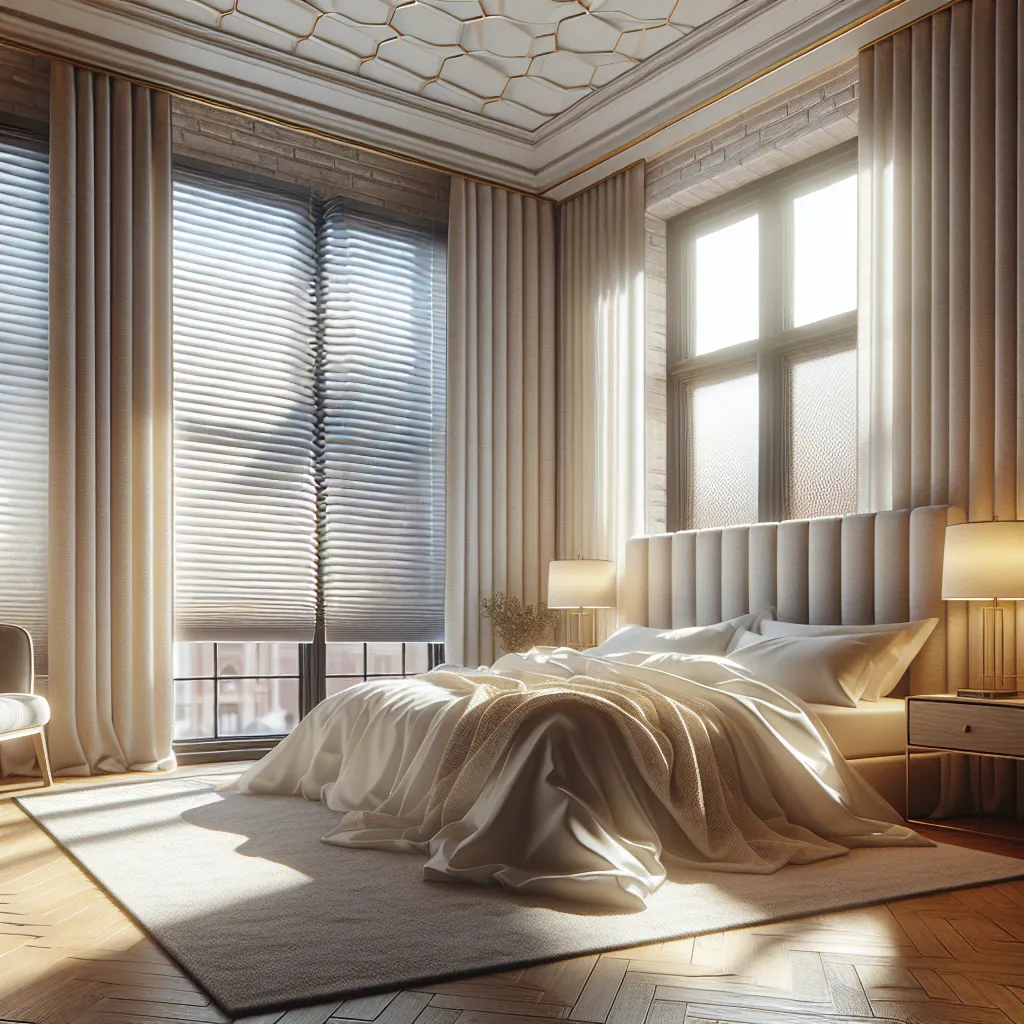
Bedrooms benefit from the insulating properties of cellular shades. The honeycomb cells keep the room warmer in winter and cooler in summer, improving both sleep comfort and energy bills. Choose blackout cellular shades with top-down/bottom-up for the best combination of privacy, darkness, and morning light options.
Living Rooms: Either Works (Depends on Style)
In a modern or minimalist living room, roller shades complement the clean aesthetic. In a traditional or transitional living room, the subtle texture of cellular shades adds visual warmth. Solar screen roller shades are excellent for living rooms with a view you want to preserve.
Kitchens: Roller Shades Win
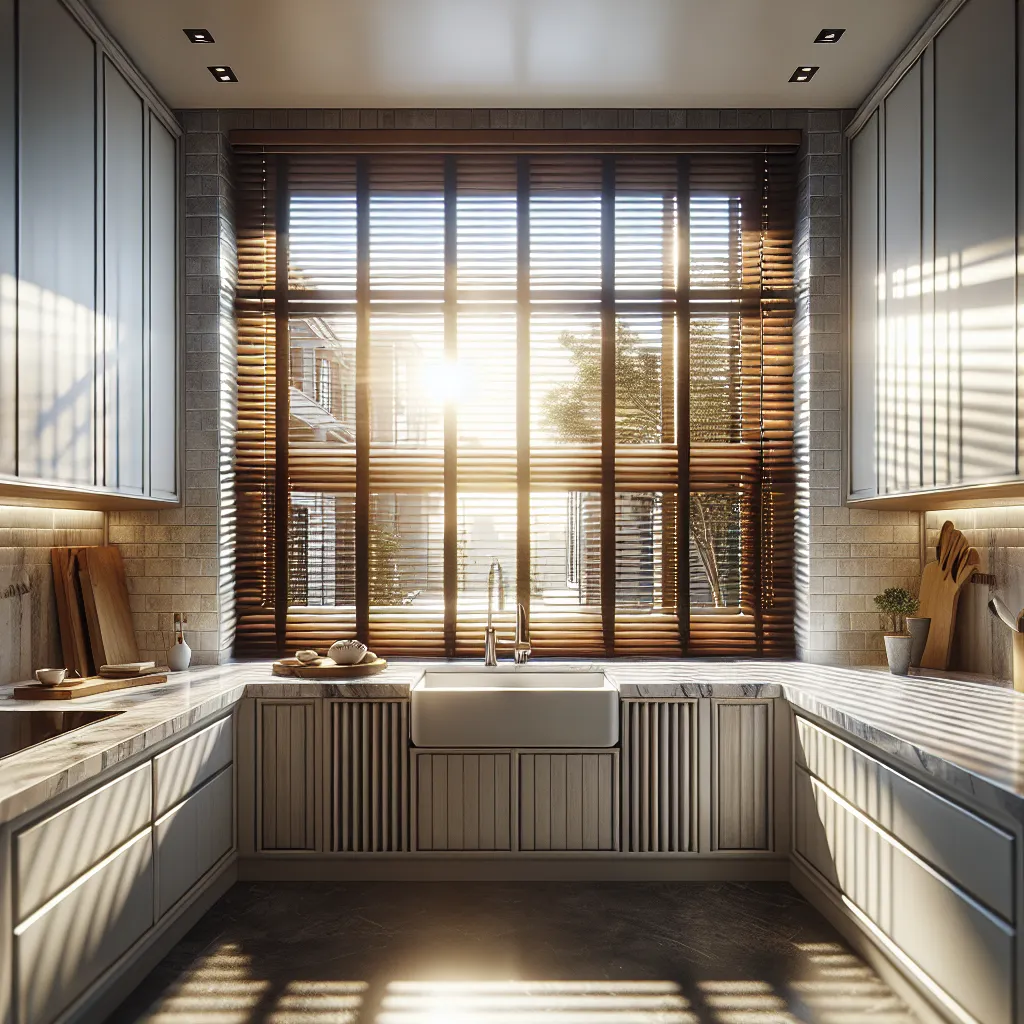
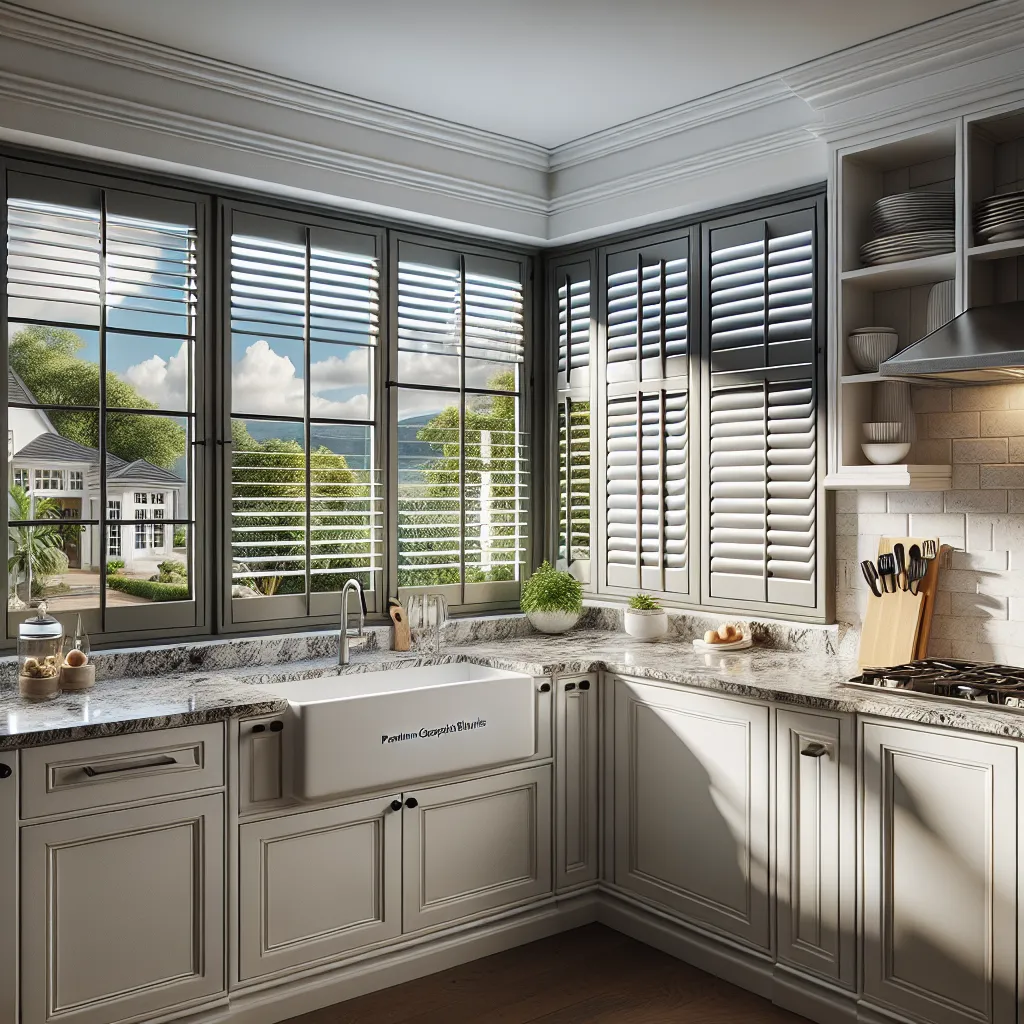
Kitchens need window treatments that are easy to clean and resistant to moisture and cooking residue. Roller shades with wipeable fabric handle kitchen conditions better than cellular shades, whose pleated cells can trap grease particles and are harder to clean. (For the best kitchen performance, consider faux wood blinds, which outperform both shade types in moisture resistance.)
Bathrooms: Roller Shades Win (With Caveats)
Moisture from showers and baths can damage the pleated cells of honeycomb shades over time, causing them to lose shape and develop mildew. Roller shades with moisture-resistant fabric handle bathroom humidity better. That said, neither shade type is truly waterproof. For bathrooms with heavy moisture, faux wood blinds remain the safest choice.
Home Offices: Cellular Shades Win
Temperature consistency matters during long work hours, and cellular shades deliver the best climate control. Light-filtering cellular shades reduce screen glare while keeping the workspace bright and comfortable. Top-down/bottom-up operation lets you maintain privacy from passersby while keeping the upper portion of the window open for natural light.
Sunrooms and Large Windows: Roller Shades Win
Large expanses of glass generate significant solar heat gain. Solar screen roller shades reduce heat and glare while preserving the panoramic view that makes sunrooms appealing in the first place. They are also lighter per square foot than cellular shades, making them easier to operate on oversized windows. Motorized roller shades are especially practical for hard-to-reach windows.
Durability and Lifespan
Cellular Shades: 5 to 8 Years
Cellular shades have a moderate lifespan. Over time, the honeycomb cells can lose their crisp shape, especially in windows that receive heavy daily use (raised and lowered frequently). The pleated fabric is also more prone to creasing and showing wear than the smooth fabric of roller shades. UV exposure gradually fades and weakens the fabric.
The most common failure point is the internal cords that run through the cells. When these break, the shade may not raise or lower properly. Repair is possible but often costs enough that replacement makes more sense.
Roller Shades: 7 to 10 Years
Roller shades tend to last longer because their design is simpler. The fabric endures less mechanical stress since it rolls rather than folds. The roller mechanism (spring or clutch) is the most common failure point, and quality mechanisms can last a decade with normal use.
Premium roller shade fabrics are often treated with UV stabilizers that slow fading and degradation. This is especially important for south-facing and west-facing windows that receive intense afternoon sun.
Cellular Shades vs Roller Shades: Decision Framework
Choose cellular shades if:
- Energy efficiency is a top priority
- You live in a climate with cold winters, hot summers, or both
- You want top-down/bottom-up functionality
- You prefer a softer, more textured appearance
- You are covering bedroom or home office windows
- You want to reduce heating and cooling costs
Choose roller shades if:
- Budget is your primary concern
- You want the cleanest, most minimal look
- You need easy-to-clean window treatments for kitchens or bathrooms
- You want printed patterns or solar screen fabrics
- You are covering large or hard-to-reach windows
- You prefer a thinner profile when the shade is raised
Can You Use Both in the Same Home?
Absolutely. Many homeowners use cellular shades in bedrooms and living areas (where insulation and comfort matter most) and roller shades in kitchens, bathrooms, and sunrooms (where practicality and clean lines take priority). As long as you coordinate colors across both shade types, the combination looks intentional rather than mismatched.
Find the Right Shade for Your Home
Both cellular shades and roller shades are excellent products -- the right choice simply depends on what you value most. If you want to see how different materials, colors, and opacities look against your windows and walls, order free samples to compare in person.
Need help deciding? Our team has guided thousands of homeowners through this exact comparison. Contact us for a personalized recommendation based on your climate, room layout, and design preferences.